Beyond the Headlines The Real Story of Private Military Contractors Today
The world of private military contractors operates in a shadowy nexus of geopolitics and profit, often escaping the scrutiny of traditional war reporting. Our coverage cuts through the fog, delivering unflinching analysis on the powerful corporations reshaping modern conflict.
Shifting Frontlines: The Evolution of PMC News Coverage

The way we hear about private military companies has totally changed. Early on, they were shadowy figures in the background of war reporting. Now, they’re often front and center, with their own press releases and social media feeds. This shift means we’re getting more direct information, but it also blurs the line between independent journalism and corporate messaging. Navigating this new landscape requires a sharp eye, as distinguishing factual conflict reporting from polished propaganda is the modern reader’s crucial challenge.
From Niche Interest to Mainstream Headlines
The early newsreels framed private military companies as shadowy mercenaries, their actions whispered in brief, cryptic dispatches. Over decades of conflict, the coverage has dramatically shifted. Today, satellite imagery tracks their convoys, and their corporate spokespeople issue press releases, transforming them into **legitimate security contractors** in the public eye. This evolution from fringe actors to headline regulars mirrors their growing geopolitical influence, forcing journalism to grapple with their complex role between sovereign power and corporate enterprise.
The Blackwater Tipping Point: A New Era of Scrutiny
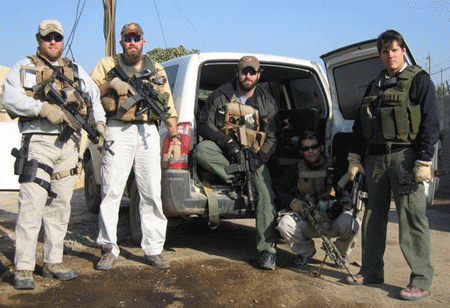
The coverage of private military companies has shifted dramatically over the years. Early reports often framed them as shadowy mercenaries, but modern analysis treats them as complex geopolitical actors. This evolution in PMC news coverage reflects a deeper public understanding of their role in modern warfare and diplomacy. Today’s reporting digs into their contracts, legal gray areas, and real-world impact far more critically. Following the latest private military contractor analysis is key to grasping contemporary conflict.
Beyond Iraq and Afghanistan: Coverage in New Conflict Zones
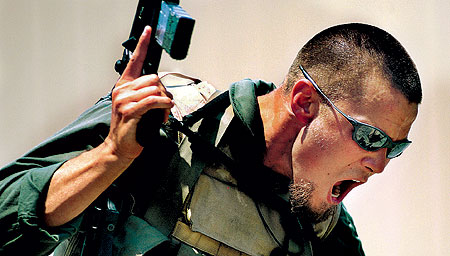
The coverage of private military companies has dramatically shifted from shadowy footnotes to front-page scrutiny. Initially ignored or glamorized, today’s reporting dissects their complex impact on global security dynamics. This evolution reflects a demand for greater transparency in modern warfare. Investigative journalists now track their financial networks and legal ambiguities, moving beyond battlefield anecdotes to analyze systemic influence. The narrative has matured from sensationalism to a critical examination of outsourced conflict.
Framing the Narrative: Common Media Lenses and Terminology
Imagine every news story as a prism, refracting a single beam of light into a spectrum of possible interpretations. This is the power of framing, where media outlets select certain facts and present them through specific lenses like the conflict frame or the human-interest angle. Terminology like “spin” or “gatekeeping” describes how narratives are shaped, guiding the audience toward a particular understanding. Recognizing these constructed lenses is the first step toward becoming a discerning consumer of information in our complex media landscape.
“Mercenaries” vs. “Contractors”: The Power of Labels
Understanding media lenses and terminology is essential for critical consumption. Key concepts like gatekeeping (what gets published) and framing (the angle of a story) shape public perception. Recognizing terms such as “spin,” “priming,” and “narrative” allows you to deconstruct messages and identify underlying biases. This analytical skill is a cornerstone of effective media literacy education, empowering you to discern intent and seek out diverse sources rather than passively accepting a single presentation of events.
The “Force Multiplier” Frame: Strategic and Economic Angles
In the theater of news, media lenses are the unseen directors, shaping the story before a single word is published. Through the deliberate choice of terminology—labeling an event a “protest” versus a “riot,” or a “fiscal adjustment” versus an “austerity cut”—outlines are drawn around public understanding. This process of **media framing analysis** subtly guides the audience’s focus, highlighting certain aspects while relegating others to the shadows. The narrative is built not just with facts, but with the very language used to present them, constructing the stage upon which societal debates are performed.

The “Accountability Gap” Frame: Legal and Ethical Scrutiny
Understanding media lenses and terminology is crucial for decoding the stories that shape our world. By examining the **power of media framing**, we see how choices in language, sourcing, and emphasis actively construct reality for the audience. Common lenses like the conflict frame or the human-interest angle subtly guide perception, while terms like “gatekeeping” and “priming” reveal the mechanics behind the curtain. This analytical skill transforms passive consumption into active, critical engagement. Mastering this vocabulary is essential for media literacy in the digital age.
Key Players and Sources in PMC Reporting
When you’re digging into private military company (PMC) reporting, a few key players always pop up. Investigative journalists from outlets like The New York Times or The Intercept are crucial, often risking their safety for the story. Whistleblowers and former contractors provide the explosive insider accounts that make headlines. For raw data, you’ll want to look at government contracts databases and reports from think tanks and NGOs specializing in conflict zones. Remember, following the money through corporate filings is often the best way to understand a PMC’s real influence and global security footprint.
Corporate Press Releases and Executive Statements
Effective reporting on Private Military Companies (PMCs) relies on a diverse network of key players and specialized sources. Investigative journalists, confidential whistleblowers, and NGOs like the International Committee of the Red Cross provide critical ground-level insights. Official documents, such as government contracts and UN panel reports, offer essential verification, while satellite imagery analysts and local fixers reveal otherwise hidden operations. This multi-source approach is vital for **uncovering global security contractor networks** and holding powerful, opaque entities accountable in a complex and shadowy industry.
Government Reports and Congressional Hearings
Effective private military company (PMC) reporting relies on a network of key players and diverse sources. Investigative journalists, NGOs like Amnesty International, and whistleblowers within the industry provide critical ground truth. Transparent conflict journalism must also rigorously consult official government contracting data, legal filings, and local eyewitness accounts to verify claims. This multi-source approach is essential to pierce the corporate veil. Ultimately, credible reporting synthesizes these disparate voices to hold powerful, opaque security actors accountable to the public.
Whistleblowers and Investigative Journalists
Effective Private Military Company (PMC) reporting relies on identifying key players and diverse sources. **Crucial intelligence on private military contractors** often comes from a network including former employees, government procurement databases, and local journalists in conflict zones. Analysts must cross-reference corporate filings with on-the-ground testimony to verify activities and ownership structures, which are frequently obscured through complex offshore financial systems. Building trust with this range of human and documentary sources is fundamental for accurate reporting.

Academic and Think-Tank Analysis
Investigating Private Military Companies (PMCs) requires navigating a complex web of key players and diverse sources. Uncovering private military contractor networks involves analyzing corporate filings, government procurement databases, and leaked documents. Critical voices include whistleblowers, investigative journalists, and NGOs like the Center for Civilians in Conflict, who often piece together operational truths from soldier testimonials and local reporting. This dynamic landscape demands cross-referencing official statements with on-the-ground evidence to build an accurate picture of this shadowy industry’s global impact.
Major Themes in Contemporary PMC News
The modern private military company narrative unfolds like a shadowy geopolitical thriller, where corporate mercenaries operate in legal gray zones from African mineral fields to Middle Eastern battlefields. A central, chilling theme is their evolution from simple security guards to sophisticated, state-like actors wielding immense influence.
This blurring of lines between corporate profit and national security fundamentally challenges the traditional monopoly of state violence.
Concurrently, intense scrutiny focuses on accountability and oversight, as news reports dissect incidents of alleged human rights abuses and the complex legal frameworks—or lack thereof—that attempt to govern their actions, leaving a trail of moral and political ambiguity in their wake.
High-Profile Incidents and Legal Battles
Contemporary private military company (PMC) news is dominated by the theme of **regulatory and legal ambiguity**. Operations in conflict zones like Ukraine and Africa highlight the struggle to define their status under international law, blurring lines between combatants and contractors. This creates significant **geopolitical risk management** challenges for states utilizing their services.
The lack of a clear, binding international legal framework is the single greatest factor enabling PMC operational overreach and subsequent impunity.
Concurrent themes include the sector’s rapid technological adoption in drone warfare and cyber operations, and the ethical debates surrounding the privatization of inherently state-controlled violence.
Financial Scale and Government Contracting
Contemporary private military company (PMC) news is dominated by the **geopolitical impact of private military contractors**. Coverage vibrates with themes of shifting warfare, where these firms operate in legal gray zones from Ukraine to Africa, blurring lines between national and corporate interests. Intense scrutiny focuses on accountability and regulation, as high-profile incidents raise questions about oversight and human rights. The industry’s rapid evolution, driven by tech integration and global demand, makes it a dynamic and contentious fixture in modern conflict reporting.
This creates a potent, often unsettling, fusion of boardroom strategy and battlefield reality.
Geopolitical Influence and Wagner-Style Groups
Contemporary private military company (PMC) news is dominated by the theme of **global security privatization**. This encompasses their expanding roles beyond traditional guarding, including complex logistics, cyber warfare, and intelligence. A critical focus is the evolving **legal and ethical frameworks** governing their use-of-force and accountability, often described as operating in a “legal gray zone.” Furthermore, analysis frequently centers on their impact on **geopolitical stability**, as state actors leverage PMCs for deniable power projection, reshaping conflict dynamics in regions like Africa and Eastern Europe.
Cybersecurity and Space: The New Domains

Contemporary private military company (PMC) news is dominated by the **geopolitical influence of private military contractors** shifting global power dynamics. Coverage focuses on their role as force multipliers in active conflicts, the legal gray zones of their accountability, and their expanding missions into cyber warfare and critical infrastructure protection. This reporting underscores a transformative trend where national security is increasingly outsourced, raising profound questions about sovereignty and the future of warfare itself.
Challenges and Criticisms in Media Coverage
Media coverage faces significant challenges and criticisms that impact public trust. The relentless 24-hour news cycle often prioritizes speed over accuracy, leading to factual errors and insufficient verification. Sensationalism and the pursuit of high ratings can distort the importance of stories, a practice known as clickbait journalism. Furthermore, accusations of political bias, from both the left and the right, challenge the ideal of objective reporting. The concentration of media ownership into fewer corporate hands raises concerns about diverse perspectives being stifled and coverage influenced by commercial or political interests beyond pure newsworthiness.
Opacity and Secrecy: Reporting on a Shadowy Industry
Media coverage faces significant challenges regarding **media bias and objectivity**, as critics argue that consolidation and partisan outlets erode public trust. The relentless 24-hour news cycle often prioritizes speed over accuracy, while the complex economics of digital advertising incentivize sensationalism over substantive reporting. This environment makes it difficult for audiences to discern credible journalism, undermining the essential role of a free press in a functioning democracy. Rebuilding this trust requires a recommitment to rigorous, transparent journalistic standards.
Access and Embedding: Reliance on Official Narratives
Media coverage faces the significant challenge of navigating the fine line between speed and accuracy in the digital age. The relentless 24-hour news cycle often prioritizes being first over being right, leading to the spread of misinformation and eroding public trust. *This pressure creates a landscape where sensationalism can overshadow substance.* Furthermore, accusations of media bias, whether real or perceived, fuel polarization and complicate the public’s ability to discern factual reporting. These dynamics present a major hurdle for achieving truly objective journalism and highlight the critical importance of **ethical journalism standards** in maintaining a healthy democracy.
Oversimplification of Complex Legal and Operational Realities
Media coverage faces intense scrutiny for its perceived Michael Moore Posts Julian Assange’s Bail biases and the relentless 24-hour news cycle. The pressure to be first often sacrifices accuracy, while the chase for clicks fuels sensationalism over substance. This erosion of public trust is a critical challenge for modern journalism. Furthermore, the complex algorithms of social media platforms create insular echo chambers, where audiences are fed reinforcing narratives rather than a balanced media diet. Rebuilding credibility requires a steadfast commitment to ethical reporting standards and transparent fact-checking processes.
The Impact of Coverage on Public Perception and Policy
Media coverage significantly shapes public perception by framing issues, highlighting certain facts while omitting others. This curated reality directly influences what citizens prioritize and demand from their leaders. Consequently, policymakers often feel compelled to align their agendas with the media narrative, sometimes at the expense of less-publicized but critical data. To drive substantive change, advocates must strategically engage with press cycles to elevate their issues, understanding that public perception is a powerful, often decisive, precursor to policy action. Effective coverage doesn’t just report news; it sets the political stage.
Shaping the Debate on Military Privatization
Media coverage acts as a powerful lens, shaping how the public understands complex issues. When news outlets consistently highlight certain angles, it creates a **media-driven narrative** that can sway public opinion and put pressure on lawmakers. This cycle often dictates which problems get urgent policy attention and which are sidelined, directly influencing the political agenda. Ultimately, what gets covered doesn’t just inform us—it guides the national conversation and the laws that follow.
Influencing Legislative and Regulatory Efforts
Media coverage profoundly shapes public perception and drives policy agendas. The **media influence on public opinion** acts as a powerful filter, highlighting certain crises while obscuring others, thereby determining what the public deems important. This curated reality directly pressures legislators, as sustained news cycles create a palpable demand for action.
A story’s prominence often matters more than its factual depth in triggering legislative response.
Consequently, the spotlight of coverage doesn’t just report on issues—it actively manufactures the political urgency to address them, for better or worse.
Public Awareness of “Plausible Deniability” in Foreign Policy
Media coverage significantly shapes public perception and drives policy agendas. The frequency and framing of issues determine what the public considers important, a process known as agenda-setting theory. When news outlets consistently highlight a specific crisis, it creates a perceived public mandate, pressuring lawmakers to propose and fast-track legislation. Consequently, policy decisions can become reactive to media cycles rather than comprehensive, long-term planning, directly linking media influence to legislative outcomes.
Share this content:

Post Comment